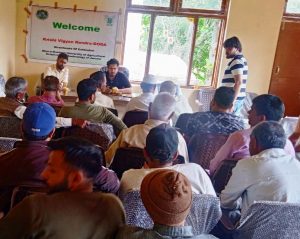
Krishi Vigyan Kendra (KVK) Doda, under the aegis of Sher-e-Kashmir University of Agricultural Sciences and Technology Jammu (SKUAST-Jammu) on Sunday organized a comprehensive training programme on deworming, vaccination and animal nutrition at Village Khalloo.
The Animal Husbandry Department also coordinated in hosting the event.
The programme aimed at creating awareness among livestock farmers regarding scientific animal healthcare practices and sustainable dairy farming techniques.
The training programme was conducted under the guidance of Vice Chancellor, SKUAST-Jammu Dr B.N. Tripathi and under the supervision of Director Extension, SKUAST-Jammu Dr. Amrish Vaid.
A large number of livestock farmers, dairy farmers and rural youth participated enthusiastically and interacted with experts on various issues related to animal health and dairy management.
The programme was organized by Chief Scientist and Head, KVK Doda Dr. Amit Singh Charak. FPO Development Officer Arsalan Gana, under the Competitiveness Improvement of Agriculture and Allied Sectors Project (JKCIP), welcomed the participants and highlighted the importance of Farmer Producer Organizations (FPOs), government welfare schemes and scientific livestock management practices for enhancing milk production and improving farmers’ livelihoods.
During the technical sessions, Dr. Vishal Kotwal from the Animal Husbandry Department delivered expert lectures on balanced feeding of dairy animals, prevention and control of common livestock diseases, vaccination schedules, clean milk production techniques and scientific management practices. He stressed that proper nutrition, timely vaccination, regular deworming and hygienic milking practices are essential for improving milk quality, enhancing animal productivity and increasing farmers’ income.
The experts also emphasized the importance of maintaining cleanliness in cattle sheds, proper sanitation during milking operations and regular health check-ups of animals to minimize disease outbreaks and ensure sustainable dairy farming.
Officials from the Animal Husbandry Department informed farmers about various veterinary healthcare services and government schemes available for livestock development in the district.
An interactive session was also held in which participants raised various queries related to livestock diseases, vaccination and dairy management practices. The experts responded in detail and encouraged farmers to adopt modern scientific techniques for better animal health and sustainable livelihood generation.