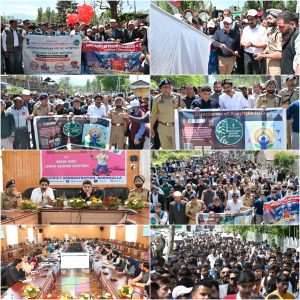
BARAMULLA, APRIL 21: As part of the ongoing 100-day Nasha Mukht Jammu and Kashmir campaign, the District Administration Baramulla today organized a mega Padyatra to intensify awareness against drug abuse and promote a healthier, addiction-free society.
Padhyatra was flagged off by Commissioner Secretary Social Welfare, Sarmad Hafeez who is also Distinct Mentor for 100 days NMBA campaign, from Dak Bunglow in presence of Deputy Commissioner Baramulla, S.F. Hamid, SSP Baramulla, Gurinderpal Singh, SSP Sopore, Iftikhar Talib, ADC Baramulla, Syed Altaf Hussain Musvi, ADC Sopore, S.A. Raina and saw enthusiastic participation from other officers, officials, civil society members, youth and a large number of students.
The initiative aimed to sensitize people, especially the youth, about health consequences of drug addiction while encouraging them to adopt a positive and disciplined lifestyle.
The padyatra traversed through key areas of Baramulla town and culminated at Showkat Ali Stadium Baramulla. Throughout the march, participants carried placards and raised slogans, powerfully highlighting the harmful effects of substance abuse and reinforcing the message of a drug-free society.
Earlier, Sarmad Hafeez, chaired a comprehensive review meeting to assess the progress and enforcement of the Nasha Mukht Jammu and Kashmir initiative in district Baramulla.
During the meeting, the commissioner secretary directed the district administration to intensify awareness campaigns at the grassroots level to penetrate every section of society, particularly targeting the youth, to educate them about the ill effects of substance abuse.
He further urged officers to adopt innovative and engaging methods to combat the drug menace, including the involvement of national figures, sportspersons, and local icons who can effectively influence and inspire the younger generation.
Highlighting the importance of impactful execution, Commissioner Secretary instructed that the campaign should not be reduced to a mere ritualistic exercise, but must bring about a tangible and meaningful change in society.
Stressing the need for collective responsibility, he called for a collaborative approach wherein all stakeholders, including government departments, law enforcement agencies, educational institutions, and civil society work in close coordination.